Catalogue & discovery
Categories, product variations, product detail layouts, search requirements and catalogue import rules.

Build a storefront around your catalogue, customers and fulfilment rules. We map product data, checkout requirements and operational handoffs before selecting extensions or integrations.

Find products online or in store.
Choose an eligible fulfilment method.
Validate stock, address and order status.
Pick, pack and prepare the handoff.
Use the agreed carrier or local fleet.
Review tracking and delivery evidence.
A proposed operating journey. WooCommerce, carrier and POS connections are validated per merchant before activation.
The following workstreams inform your proposal. The agreed deliverable list defines what is included; they are not an automatic package bundle.
Categories, product variations, product detail layouts, search requirements and catalogue import rules.
Cart, account and checkout design; tax, payment and policy requirements reviewed with the business owner.
Stock ownership, pickup or shipping rules, order status and customer notification responsibilities are mapped.
Catalogue samples, checkout scenarios, fulfilment exceptions and staff tasks are tested in an agreed non-production environment.
Workflow illustration. Application connections and automation are verified separately before activation.
Connect store orders with the right delivery method, shipping account and operating tools.
Scope local delivery around pickup readiness, service areas, capacity and customer expectations. Instant or scheduled services depend on the supported provider and location.
Coverage & service level confirmed per storeUse merchant-owned ClickShip/Freightcom accounts for eligible carrier services. ClickShip documents WooCommerce order/product sync, checkout rates, label creation and tracking.
Provider capability documented · Store setup requiredThe public platform presents merchant workspaces, dispatch, driver assignments, tracking and proof of delivery. Verify the current build and merchant connection before a live rollout.
Explore Delivery OS ↗| Method | Ideal use case | Merchant responsibilities | Availability |
|---|---|---|---|
| Local / instant delivery | Nearby retail orders needing a prompt handoff. | Prepare the order; confirm address, coverage, driver/provider capacity and any handling requirements. | Quote and service-area review; no universal delivery time promised. |
| Scheduled delivery | Agreed delivery windows or planned store routes. | Set cutoffs, pickup readiness, capacity and customer availability. | Where supported by the selected provider and current operating build. |
| Canada-wide shipping | Carrier-eligible parcels beyond the local delivery area. | Own and fund the shipping account; supply accurate weights/dimensions, package goods, book handoff and handle exceptions. | Carrier coverage, service terms and product eligibility apply. |
Merchants fund ClickShip/Freightcom labels and carrier charges through their own accounts. Applicable Jaranova integration, maintenance and support services are covered by the agreed service package. Jaranova does not pay merchants’ shipping charges.
Provider references: ClickShip WooCommerce capabilities · ClickShip shipping & billing · Freightcom account responsibilities. No carrier rate or paid provider plan is included without agreement.
Intended cashier, barcode, inventory, receipt, loyalty and payment workflows belong in the same retail plan as WooCommerce and fulfilment. These are development requirements; working integrations and launch timing remain unconfirmed.
In development · Coming soonAccess, compatibility, provider terms and acceptance testing determine what can be connected. No new subscription is assumed.
Review goals, users, content, data and system access. Agree a dated milestone plan after discovery. Complexity, dependencies and review turnaround determine the schedule; no unverified fixed delivery time is promised.
Receive a proposal with deliverables, exclusions, responsibilities and acceptance criteria. Provider fees, licenses, media spend and ongoing support are separated where applicable.
Compare Launch, Grow, Scale & custom scope ↗Review on an isolated environment, test the agreed scenarios and approve the release separately. Handover, maintenance hours, response expectations and change requests are defined in the support agreement.
Browse the published project interfaces and individual scope. These examples do not imply every integration on this service page was delivered.
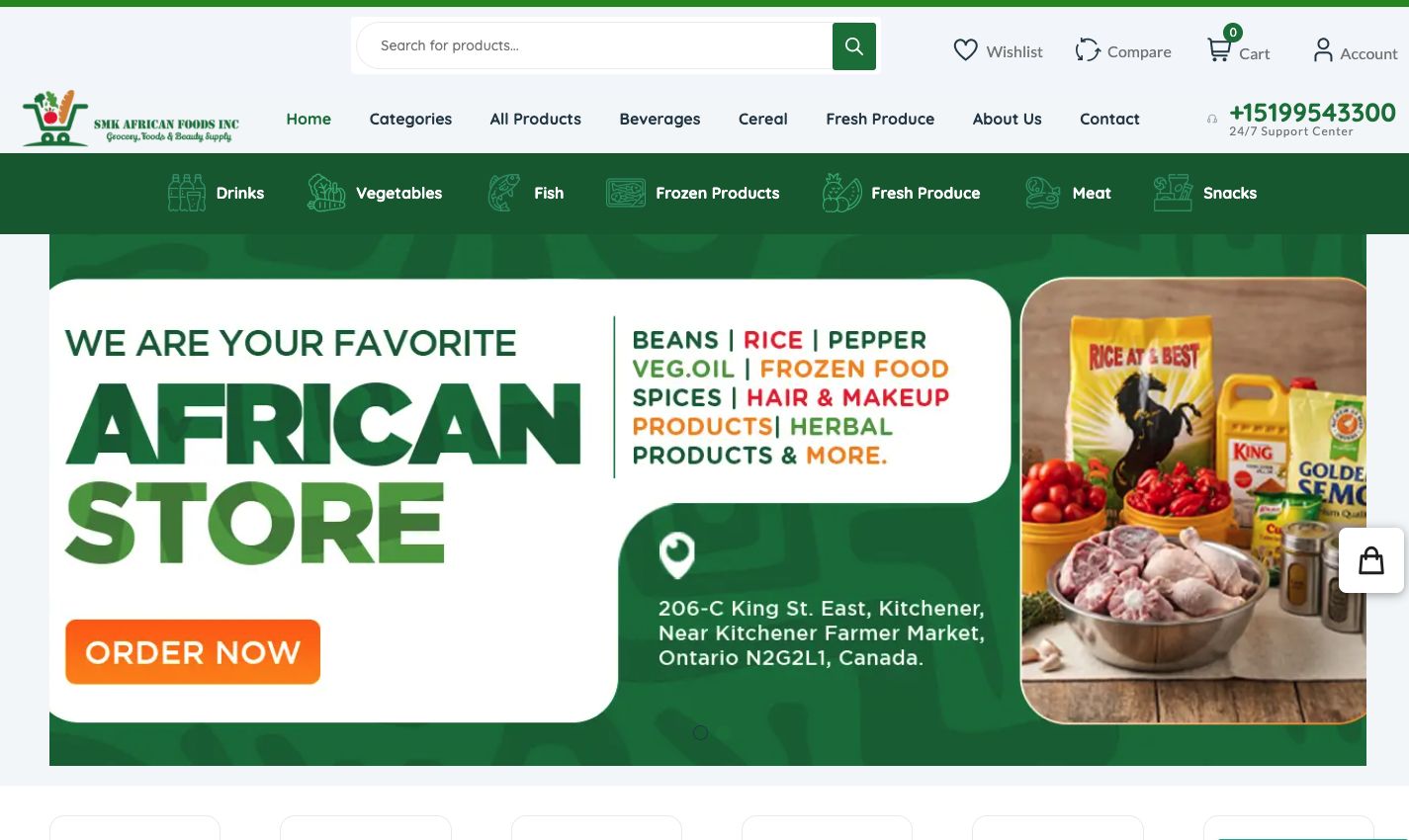
An African grocery storefront with product categories, search and a shopping journey.
Explore project ↗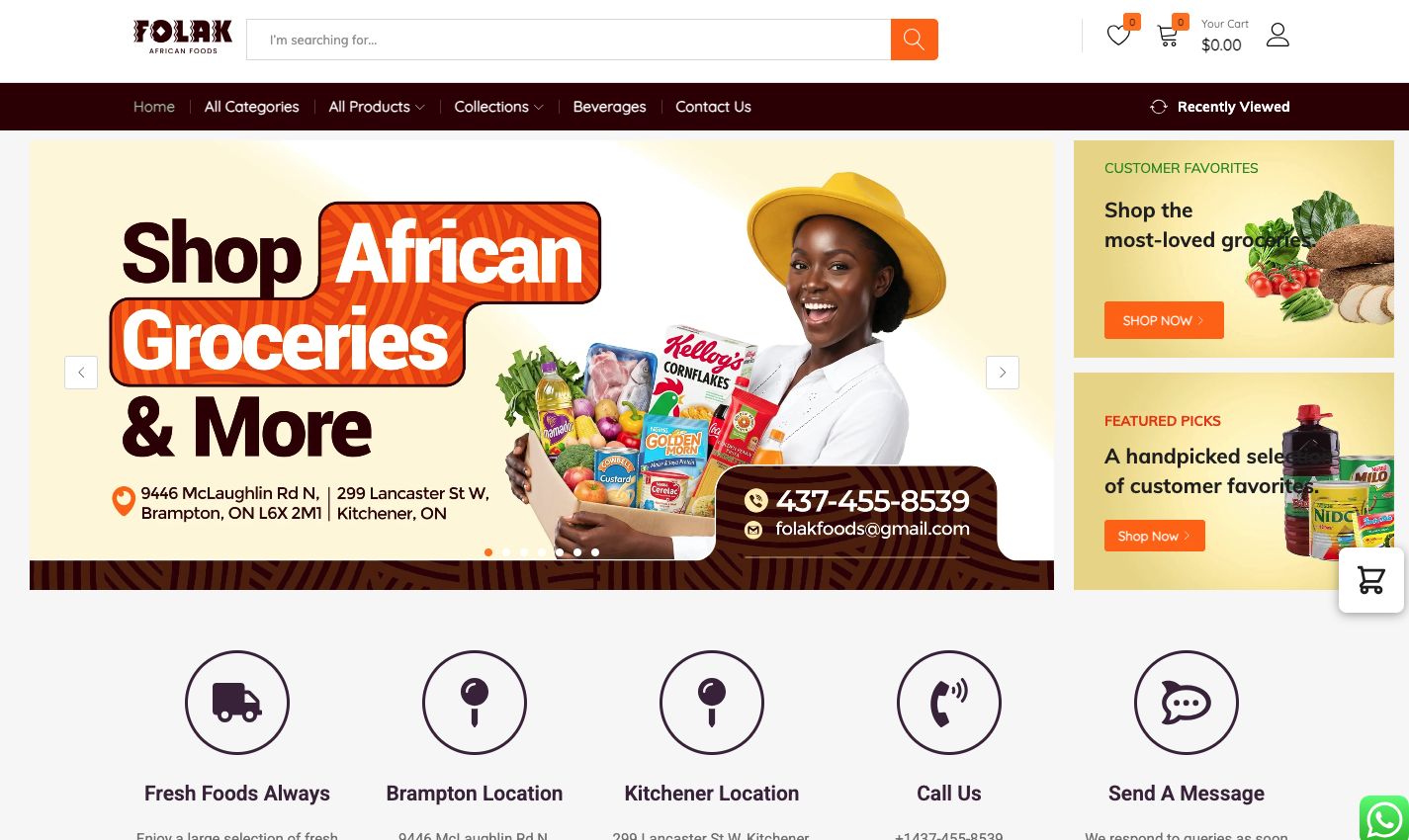
A grocery storefront combining product discovery, collections and store information.
Explore project ↗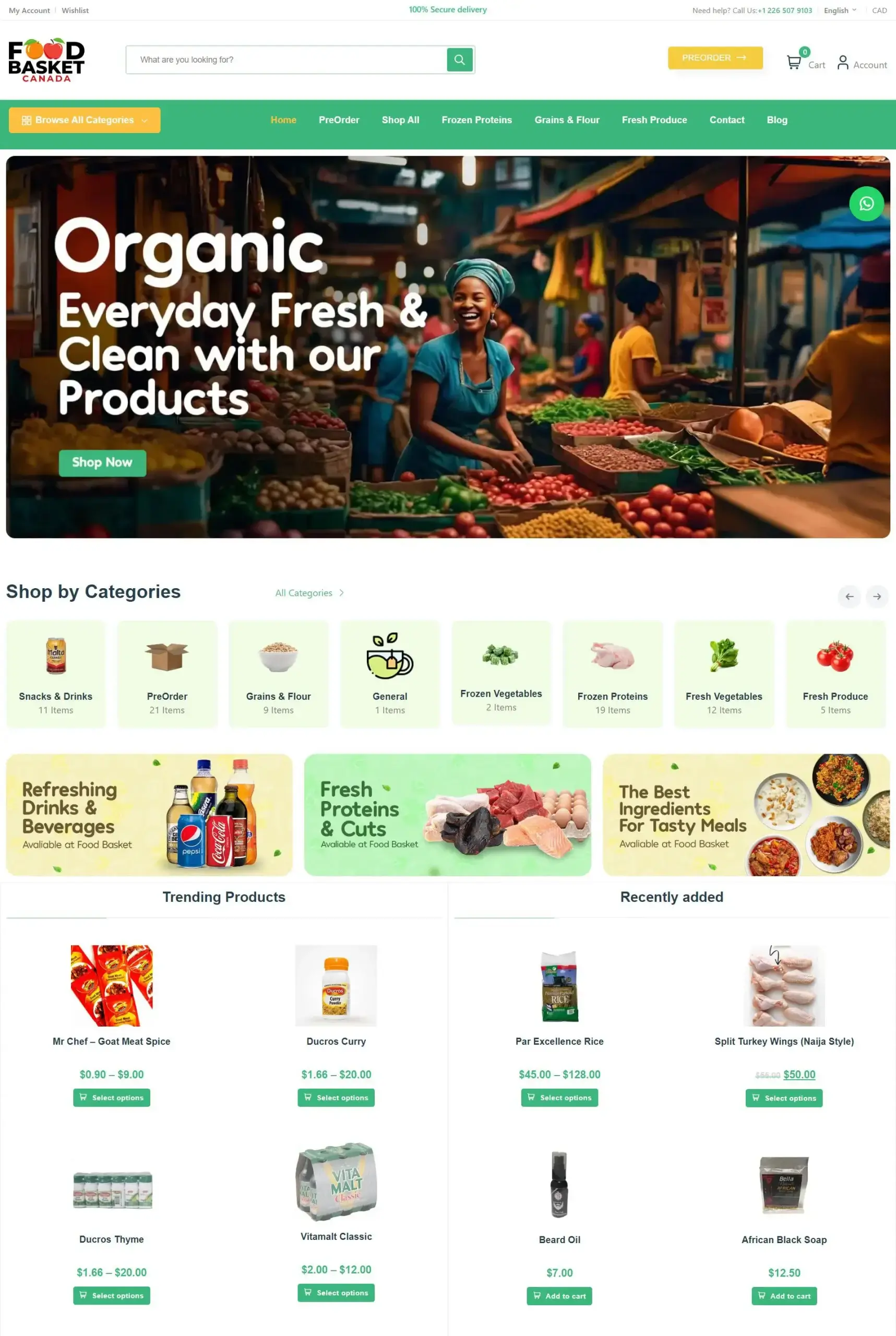
A digital grocery storefront with a product catalogue and shopping experience.
Explore project ↗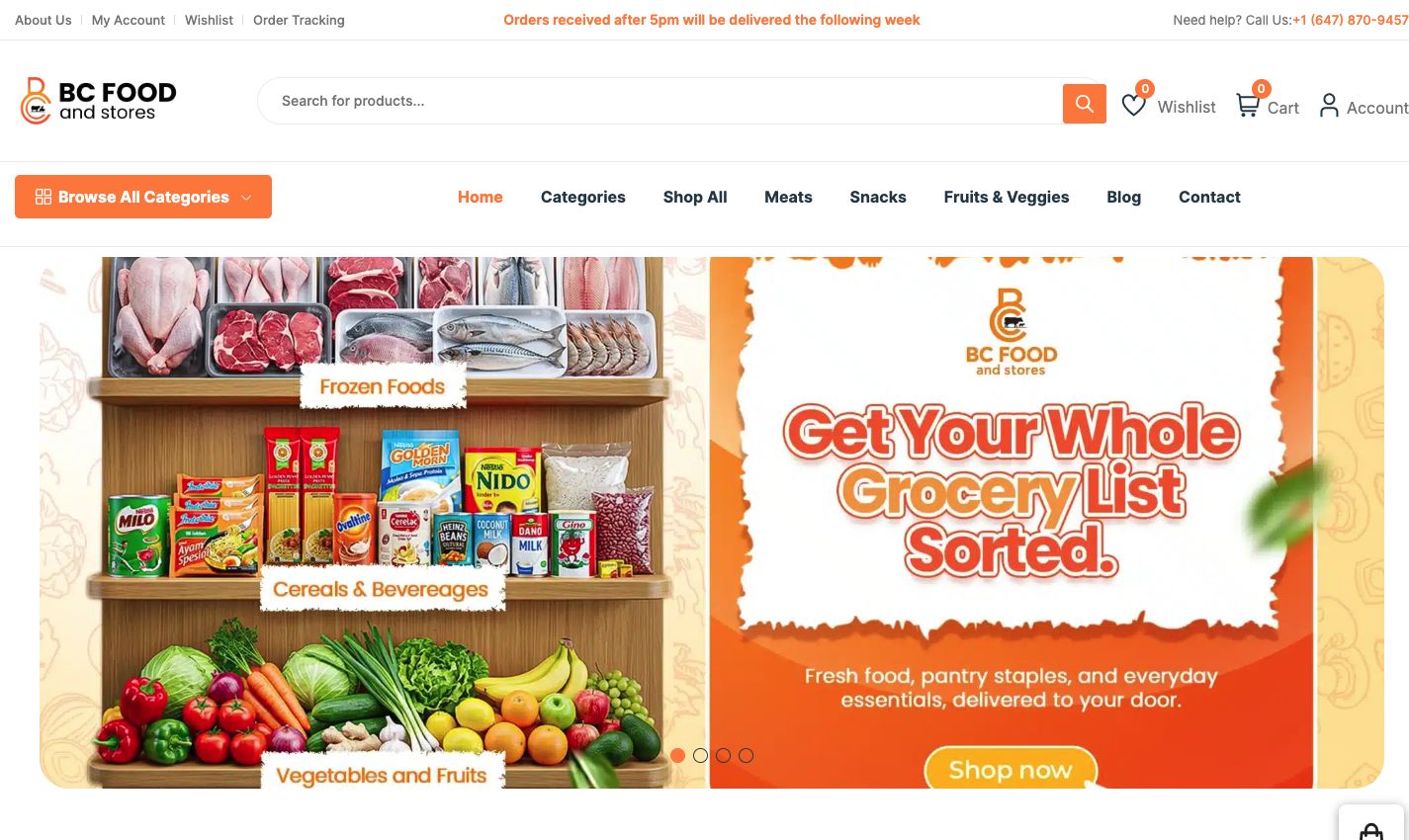
A grocery catalogue with categories, promotions and an online shopping interface.
Explore project ↗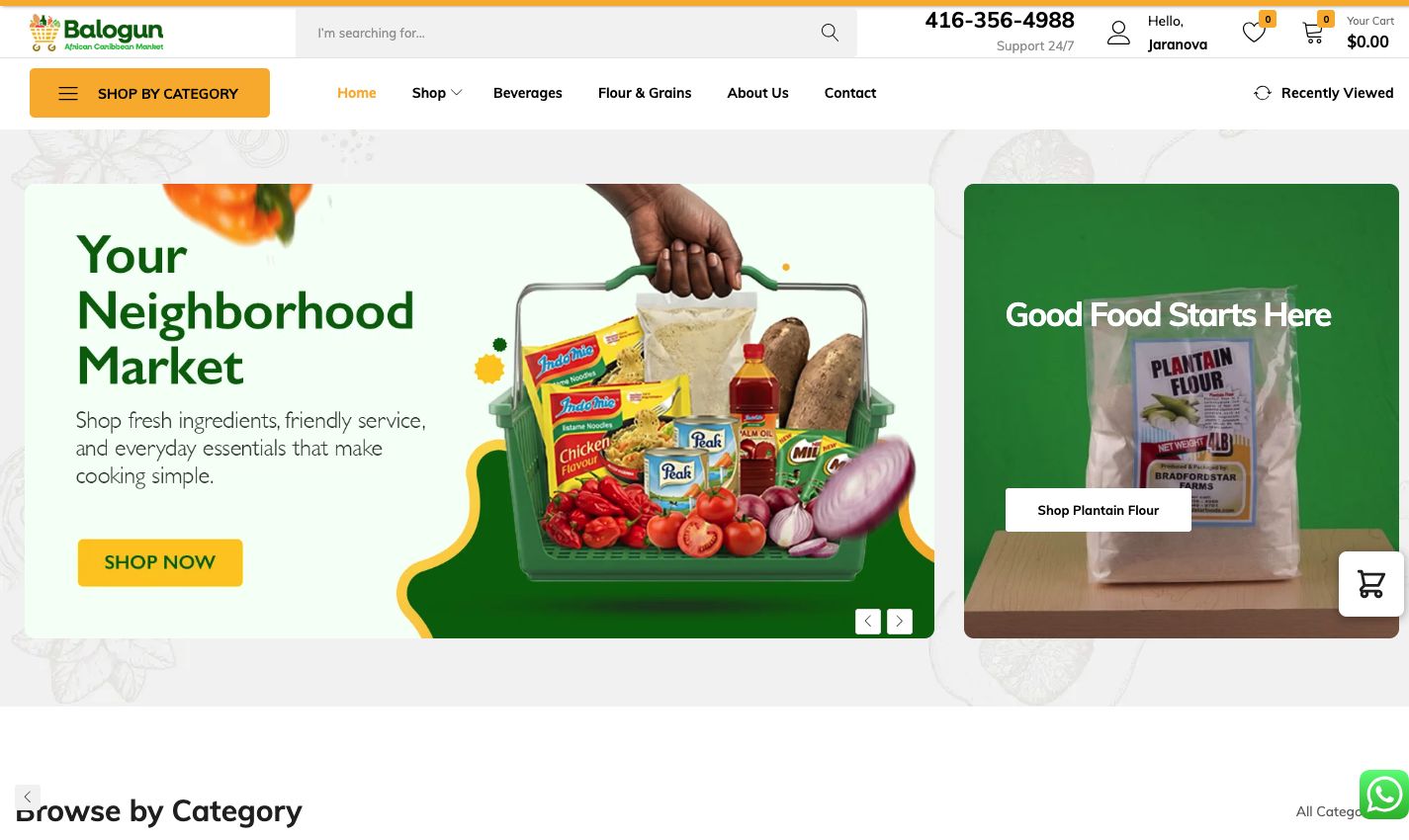
A grocery storefront with product discovery, shopping categories and market information.
Explore project ↗
A marketplace experience designed around buyers, sellers and product discovery.
Explore project ↗Questions specific to eCommerce Development.
We review the source format, variants, images and customer/order migration requirements. Trial imports and reconciliation precede any approved live migration.
That depends on the POS API, identifiers and stock ownership. We agree the source of truth and test conflict handling before promising synchronization.
Technical configuration follows owner-approved business requirements. Provider accounts, fees and tax obligations are confirmed separately; no live payment changes occur during staging.
Zones, cut-off times, fees and fulfilment capacity need explicit rules. Available extensions and Delivery OS suitability are reviewed before inclusion.
Use sandbox credentials and synthetic orders in an isolated environment. Disable real notifications and fulfilment actions while reviewing each scenario.
Performance depends on hosting, variations, search and extension behaviour. We benchmark representative data before setting an agreed capacity target.
Unclean product data, custom pricing, tax/shipping exceptions and external integration approval commonly affect the schedule.
Updates, backups, catalogue changes, monitoring and operational support are defined in a separate maintenance plan.
Tell us where you are today. We’ll help you plan what comes next.