Storefront & catalogue
WordPress/WooCommerce requirements, product identifiers, account journey and online order states.

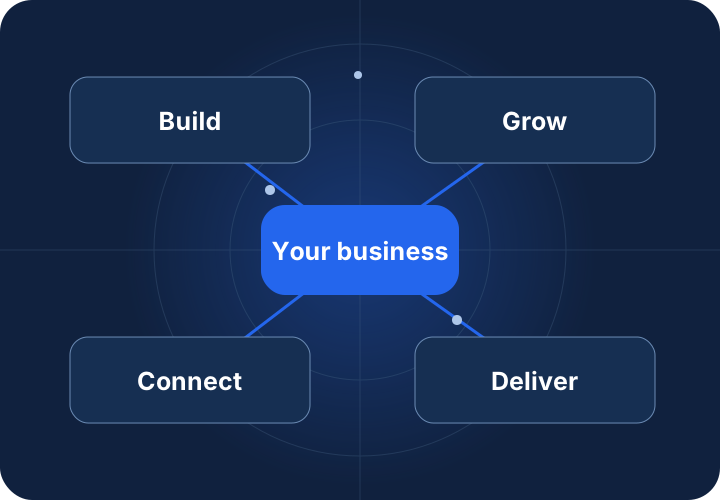
Retail Business OS is a connected solution architecture, with individual software readiness and integrations verified separately. The goal is to coordinate storefront, checkout, customer relationships and fulfilment around a clear source of truth.
Status is stated for each capability. Unverified functionality is not sold as ready to deploy.
WordPress/WooCommerce requirements, product identifiers, account journey and online order states.
Evaluate cashier operations, stock ownership and synchronization; Jaranova POS readiness remains pending.
Map contact consent, lead capture, customer follow-up and advertising attribution using supported interfaces.
Define carrier and local delivery handoffs, exception handling and Delivery OS capability verification.
Workflow illustration. Application connections and automation are verified separately before activation.
Access, compatibility, provider terms and acceptance testing determine what can be connected. No new subscription is assumed.
Review goals, users, content, data and system access. Agree a dated milestone plan after discovery. Complexity, dependencies and review turnaround determine the schedule; no unverified fixed delivery time is promised.
Receive a proposal with deliverables, exclusions, responsibilities and acceptance criteria. Provider fees, licenses, media spend and ongoing support are separated where applicable.
Compare Launch, Grow, Scale & custom scope ↗Review on an isolated environment, test the agreed scenarios and approve the release separately. Handover, maintenance hours, response expectations and change requests are defined in the support agreement.
Questions specific to Retail Business OS.
It is presented as a connected solution plan. Each component, commercial arrangement and connection requires its own readiness check.
No. Begin with your current stack and identify gaps. Replacement is considered only when justified by requirements.
Choose one agreed source of truth. Product identifiers, stock events and conflict rules are validated before synchronization.
Yes, a phased plan can begin with a useful subset. Later POS or delivery work follows separate capability and integration approval.
Only after supported data mapping, consent and retention rules are verified for the agreed implementation.
Carrier fulfilment and merchant/driver delivery may use different systems and states. The solution must map each handoff and exception.
Use synthetic catalogue, contact and order data in isolated systems; reconcile expected states and repeat requests to check duplicates.
Discovery, component implementation, provider fees and ongoing support are itemized. No all-inclusive subscription is invented.
Tell us where you are today. We’ll help you plan what comes next.